Loading...
Serving Cupertino, CA and surrounding areas. (669) 308-4473
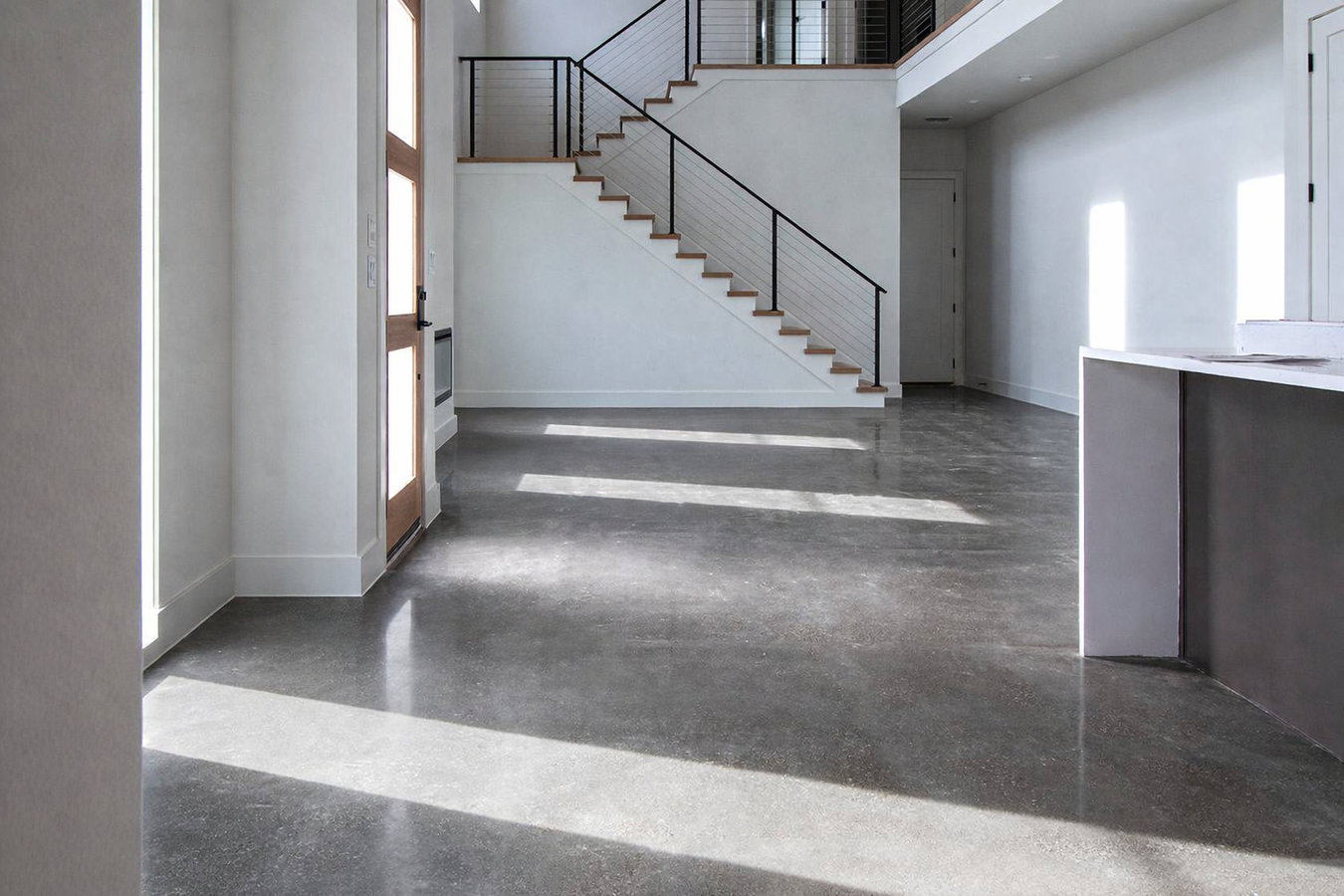
Cracked slab, uneven garage floor, or converting a space into an ADU? A properly installed concrete floor starts with the right base and ends with a surface that holds up through every Bay Area wet season.
Concrete floor installation in Cupertino starts with removing the existing surface, assessing and preparing the subbase for local soil conditions, pouring a reinforced slab, and finishing to your chosen texture - most residential projects take one to two days of active work, with the floor ready for light foot traffic within 24 to 48 hours and full use within a week.
Many homeowners in Cupertino come to us after a floor that has been patched two or three times and still keeps cracking. In older homes - and a large share of Cupertino's housing stock dates from the 1950s through 1980s - original slabs were often poured on unprepared or poorly compacted bases. When the clay-heavy soils underneath shift with the seasons, those slabs crack, tilt, or develop moisture problems that surface patching cannot fix.
For homeowners converting a garage into an ADU or finishing an interior space, a new floor is almost always the first step. It also connects naturally to garage floor concrete work, which we handle with the same base-preparation standards.
If you have patched cracks in your concrete floor more than once and they keep reappearing - especially if they are getting wider or longer - the floor itself is failing, not just the surface. In Cupertino, this is often connected to clay soils shifting with seasonal moisture changes, putting ongoing stress on the slab from below. Patching will not fix a floor that is moving.
Walk across your concrete floor and pay attention to whether it feels level. If you notice a tilt, a low spot in the middle, or areas where water pools after mopping, the slab has settled unevenly. This kind of settling is more common in older Cupertino homes built before modern soil preparation standards, and it tends to get worse over time rather than stabilizing on its own.
A white, chalky film on your floor - especially after rain or in winter - is moisture pushing up through the slab from below. Left unaddressed, this moisture damages stored belongings and any flooring material laid on top, and it signals that the existing slab may need replacement with one that includes proper moisture management in the base preparation.
Many Cupertino homeowners are converting garages or adding ADUs under the city's ADU-friendly policies. If the existing concrete in that space is rough, stained, or uneven, a new floor installation is often the first step before any other finish work. A smooth, properly finished concrete floor is the foundation everything else gets built on.
Every floor project starts with removing the old material, assessing the subbase condition, and preparing the ground with proper compaction and a gravel layer sized to local soil conditions. We handle City of Cupertino permit applications, reinforcement selection - wire mesh or rebar depending on load requirements - pouring, finishing, and control-joint cutting. For projects that connect to outdoor hardscape, like a garage that opens onto a driveway or a space that leads to a concrete pool deck, we coordinate the scope so all poured surfaces are consistent and properly tied together.
Finish options range from a standard broom texture for grip and simplicity, to a smooth trowel finish for a cleaner appearance, to polished or stained decorative finishes for homeowners who want the concrete to be a design feature rather than just a substrate. Thickness is matched to the intended use - 3.5 to 4 inches for most residential interior spaces, 5 to 6 inches for garages and areas bearing vehicle loads. Every pour gets reinforcement as standard.
Best for homeowners who need a clean, slip-resistant surface at a straightforward price - garages, utility rooms, and laundry areas.
A good fit for ADU conversions or finished interior spaces where another flooring material will be installed on top.
Suits homeowners who want the concrete to serve as the final, visible floor - modern look with minimal long-term maintenance.
Cupertino sits in a seismically active region near both the San Andreas and Calaveras fault systems, and the city's soils include expansive clay that moves with the seasons. That combination - seismic activity plus a base that swells and shrinks - means the subbase preparation under your floor is more important here than it would be in many other parts of the country. A floor poured on unprepared ground in Cupertino is a floor with a limited useful life, regardless of how well the surface is finished.
We work regularly in Fremont and San Jose, where similar clay soil conditions and ADU conversion demand are common. For homeowners planning an ADU conversion, the City of Cupertino's ADU information page is a helpful starting point for understanding what permits and inspections your project will require before a contractor ever picks up a shovel.
We respond within 1 business day and schedule a free on-site visit. Come to us with any questions about finish options, permit requirements, or ADU timeline - there is no obligation to sign anything at that visit.
We assess the existing floor or subbase, check for moisture and settling issues, and confirm whether your project requires a permit. You receive an itemized written estimate covering all costs before any work is agreed to - no surprises on the invoice.
We handle the City of Cupertino permit application. This typically adds a week or two to the timeline before the pour date but ensures the finished work gets a city inspection. We build that wait into the project schedule from the start.
The crew removes old material, grades and compacts the base, pours, and finishes the floor - usually in one to two days. We walk you through the finished floor, explain the curing timeline, and confirm when the space is ready for full use.
We will assess your space, walk you through your finish and permit options, and give you a written quote - no obligation, no sales pitch.
(669) 308-4473We have installed concrete floors for ADU conversions and garage finish-outs across Cupertino and 11 surrounding cities in Santa Clara County. The permit process, soil conditions, and inspection requirements vary by city - and that familiarity means fewer delays and no surprises on your project.
Every floor we install starts with a subbase assessment specific to your site's soil conditions. In Cupertino, that means accounting for the clay-heavy ground that shifts seasonally. Skipping this step is the primary reason concrete floors in older local homes develop recurring cracks - we do not skip it.
We pull the required City of Cupertino building permit and schedule the inspection as part of the standard job scope. You should not have to chase paperwork or wonder whether your floor is on record. A permitted, inspected floor is one a buyer's inspector will not flag when you sell.
Every concrete contractor in California is legally required to hold a valid license from the{" "}California Contractors State License Board. You can look ours up before you sign anything. Licensed means bonded, insured, and accountable under California law.
A concrete floor is one of those investments that is largely invisible once it is done - but you notice immediately when it is not right. Getting it done correctly the first time is the outcome we build toward on every project.
Take the same precision flatwork skills outdoors - a properly sloped and finished pool deck keeps your backyard safe and water in the right place.
Learn moreA garage-specific pour with the thickness and reinforcement needed to handle daily vehicle weight and Bay Area seasonal moisture.
Learn moreSpring and fall booking slots fill quickly - contact us now to schedule your estimate before the rainy season arrives and timelines get pushed out.