Loading...
Serving Cupertino, CA and surrounding areas. (669) 308-4473
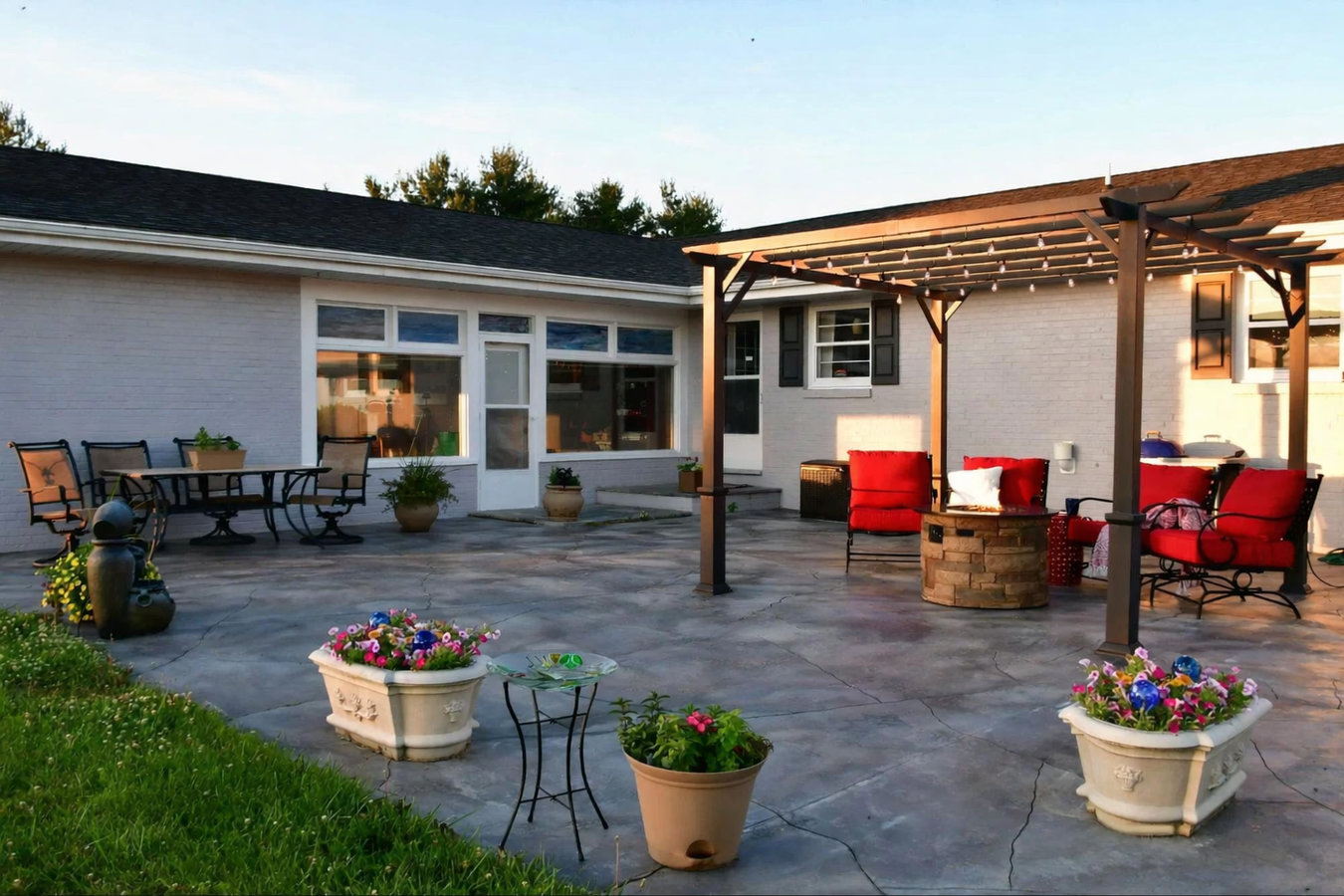
No patio, or one that has cracked and heaved from the clay soil underneath? A properly built concrete patio gives you a clean, level outdoor space that drains well, handles Bay Area winters, and adds real value to your home.
Concrete patio construction in Cupertino means digging out the area, compacting the soil, laying a gravel base designed to handle the local clay, and pouring a reinforced slab - most residential patio pours take one to two days of active work, with seven or more days needed before you put furniture on the surface.
Many Cupertino homeowners reach out after years of living with a muddy, unusable backyard through winter - or after an older concrete surface has cracked and heaved to the point where it is a tripping hazard. In both cases, the right move is usually a fresh pour rather than patching a surface that will keep failing. Cupertino's clay-heavy soil is the underlying culprit in most patio failures, and a contractor who accounts for it from the start saves you the cost of doing it twice.
If you are thinking about a decorative surface for your outdoor space, stamped concrete services can be applied to the same pour, adding a stone or brick pattern without changing the structural approach.
If your existing concrete surface shows cracks that are spreading or have a lip on one side, the slab underneath has moved. In Cupertino, this pattern is typically caused by clay soil expanding and contracting with the wet and dry seasons. Patching is a short-term fix - the movement that caused the crack is still happening.
Many Cupertino homes built in the 1960s and 1970s were sold with minimal outdoor hardscaping. If your backyard turns muddy every winter and is unusable for months, a concrete patio gives you a clean surface year-round and adds measurable value in a market where outdoor living space matters.
If standing water collects close to your house after winter rain, your yard is directing moisture toward your foundation. A properly sloped concrete patio channels rainwater away from the house and protects your foundation from moisture damage over time - one of those improvements that pays for itself in avoided repairs.
If sections of your existing patio have heaved or settled unevenly, the surface has shifted enough to be genuinely unsafe - especially for older family members and young children. In most cases, a slab that has moved this much cannot be safely leveled and needs to be removed and repoured.
Every patio project starts with an in-person assessment of your yard - slope, drainage, soil conditions, existing irrigation lines, and what you plan to use the space for. From there we handle permit applications with the City of Cupertino, site excavation, soil compaction, gravel base installation, and the concrete pour itself. Control joints are cut into every slab to guide any future cracking away from visible spots, and the surface is finished to the texture you choose. For homeowners who want a more distinctive look, concrete pool decks and patio surfaces can be finished with similar decorative techniques in the same project window.
Standard patio slabs are poured at four inches thick, which handles typical residential use - outdoor furniture, grills, and foot traffic. For homeowners planning to add an outdoor kitchen, a hot tub, or heavy planters, we recommend five to six inches with steel mesh reinforcement inside the slab. Getting this right at the start is far less expensive than removing and reporing a slab that was not built for the load.
The most cost-effective option for homeowners who want a clean, functional outdoor surface.
For homeowners who want the look of stone or brick without the cost or maintenance of natural materials.
Suits properties where the patio finish should complement or coordinate with the home's exterior palette.
Cupertino sits on alluvial Bay Area soils with a significant clay content - soil that absorbs water in winter and contracts in summer. That cycle puts persistent upward and lateral pressure on any concrete surface poured directly on it, which is why so many Cupertino patios crack within a few years of being poured. The fix is not a thicker slab - it is proper base preparation: compacted gravel that gives the soil room to move without transferring that stress to the concrete. Cupertino also sits in a seismically active area near the Monta Vista fault, which is one reason the city inspects concrete flatwork - they want to know the slab is built to handle ground movement, not just foot traffic. For additional context on local building requirements, the City of Cupertino Building Division publishes permit requirements and inspection standards.
We do patio projects throughout the area, including in Sunnyvale and Saratoga, where soil conditions and HOA requirements are similar to Cupertino's. If your neighborhood has an HOA - which is common across Cupertino's planned communities - we help you understand what your association requires before a single shovel goes in the ground.
Call or submit an online estimate request. We respond within 1 business day and schedule a free on-site visit. We ask about your yard, what you plan to use the patio for, and any finish ideas you have.
We visit your yard to measure, check slope and drainage, and assess soil and irrigation conditions. You receive a written itemized estimate. We also flag any HOA steps before you sign anything.
We handle the City of Cupertino permit application - typically a one-to-three week process. Once approved, we confirm your start date and schedule around the dry-weather window for best curing results.
The crew excavates, compacts the base, pours and finishes the slab in one day. The concrete cures for seven or more days. The city inspector visits during this window. We walk you through the finished patio before we leave the site.
We respond within 1 business day. After you submit, someone from our office will call to schedule a free on-site visit at a time that works for you. No obligation, no pressure - just a written quote based on your actual yard, not a phone guess.
(669) 308-4473Cupertino requires a building permit for most patio projects, and the application, inspection coordination, and sign-off process can be confusing. We manage it entirely so you never have to call the building department or take time off work for an inspector visit.
Most patio failures in Cupertino trace back to base preparation that did not account for the clay-heavy soil. We compact and grade the base with a gravel layer designed to buffer that seasonal soil movement - so your slab stays level through multiple wet and dry cycles.
We work throughout Santa Clara County and the surrounding area. That means familiarity with local soil conditions, permit offices, and HOA landscapes across more than a dozen communities - not just general knowledge picked up from a phone call.
Every estimate is based on seeing your yard in person - measuring the area, checking the slope, and assessing access for equipment. You get an itemized written quote before agreeing to anything, with no line items added after the job begins.
In Cupertino's high-value real estate market, outdoor living space is a genuine asset - but only when it is built to last. The difference between a patio that holds up for decades and one that starts cracking in three years comes down to what happens before the concrete is ever poured. Call (669) 308-4473 or request a free estimate online.
For concrete construction standards, see the American Concrete Institute. For contractor license verification, visit California Contractors State License Board.
Take your patio surface further with stamped patterns that mimic natural stone, brick, or tile at a lower cost.
Learn moreExtend your outdoor project around a pool with a slip-resistant, durable concrete deck built for Bay Area conditions.
Learn morePermit season fills up fast - reach out now to lock in your start date before the summer rush.