Loading...
Serving Cupertino, CA and surrounding areas. (669) 308-4473
Adding an ADU or new structure to your Cupertino property? Get a slab engineered for clay soils and seismic loads, with every permit and inspection handled from start to finish.
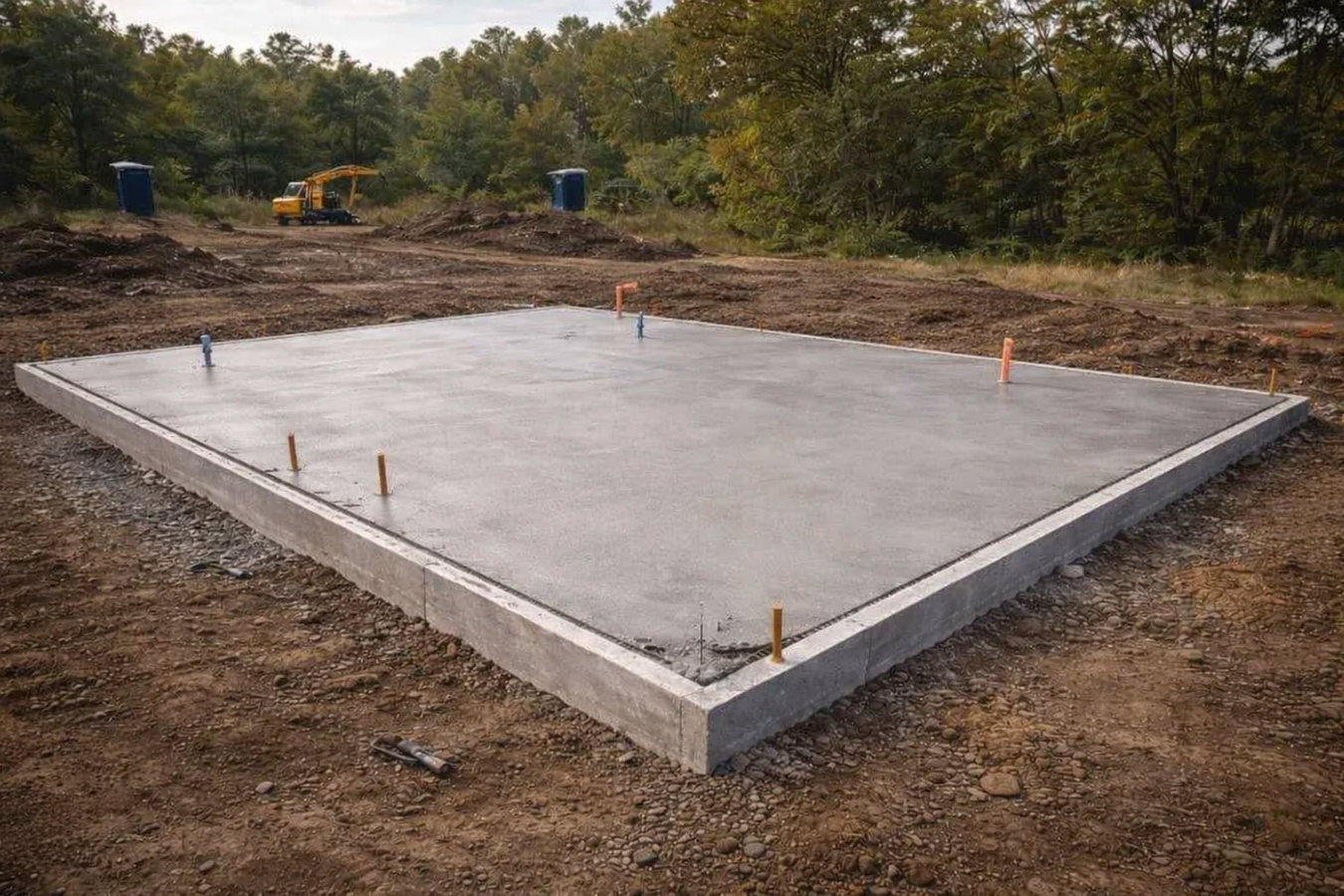
Slab foundation building in Cupertino pours a single reinforced concrete base - the floor and structural support for your structure combined - directly on prepared ground. Most projects take one to two weeks of active construction, plus a 28-day curing period before full loads can be placed, and an additional two to four weeks upfront for City of Cupertino permit review.
Most new slab work in Cupertino today is for detached ADUs, backyard workshops, and garage conversions - the city has seen a steady surge in these projects as homeowners look to add living space and rental income on existing lots. Getting the slab right from the start determines whether the structure above it holds up for decades or starts showing problems in the first few years.
Projects that also need subsurface structural support below the slab edge connect naturally to concrete footings, which distribute load into stable soil and are typically poured as part of the same permitted project.
If you are planning an ADU, detached garage, workshop, or any new structure on your Cupertino property, you will need a new slab foundation before framing can begin. There is no shortcut here - a structure without a properly engineered slab is a structure that will move, crack, and fail in ways that are expensive to fix after the fact.
Small hairline cracks are common and usually harmless. But cracks wider than a pencil, diagonal cracks running from corners, or cracks where one side sits higher than the other are signs the slab is moving. In Cupertino, the Santa Clara Valley's clay soils expand and contract with the wet-dry cycle every season, so progressive cracking is more common here than in many other parts of the country.
When a slab shifts, the walls and door frames above it shift too. If doors that used to swing freely now stick or refuse to latch, the foundation below may be moving. This symptom often appears after a dry summer followed by heavy winter rain - the soil expansion and contraction cycle in Cupertino can cause noticeable movement in a single season.
Damp spots on a concrete floor, moisture under floor coverings, or a musty smell near floor level can mean the moisture barrier beneath the slab has failed or was never properly installed. Many older Cupertino homes predate current moisture protection standards. Left unaddressed, persistent moisture under a slab damages flooring, encourages mold growth, and eventually weakens the concrete.
Every slab project starts with the ground, not the concrete. We grade and compact the soil, lay a gravel drainage layer, and install a plastic moisture barrier before any steel or concrete goes in. For most Cupertino lots, we build a post-tensioned slab - steel cables placed inside the form are tightened after the pour, giving the slab far better resistance to the clay soil movement that causes cracking on standard pours. Reinforcing bar is placed where your engineering drawings require it, and we coordinate with the city inspector before the pour so there are no holds or surprises. Projects that need structural support at the slab perimeter are paired with foundation installation for a complete structural package under one permit.
We handle the City of Cupertino permit application, submit any required soils reports or engineering drawings, and schedule every required inspection. When the slab is finished and the permit is signed off, you receive documentation that the work was reviewed and approved by the city - documentation that protects your home's value at resale. The project does not close until you have that paper trail in hand.
The right fit for homeowners adding a rentable or livable unit - engineered to Cupertino's ADU requirements, with the permit handled as part of the package.
Suits homeowners building a new garage or replacing an existing one - sized and graded for vehicle loads with proper drainage slope built in.
For teardown-rebuild projects and vacant lots - post-tensioned, fully engineered, and built to current California seismic standards from the first pour.
Large portions of Cupertino and the surrounding Santa Clara Valley sit on expansive clay soils that swell when they absorb winter rain and shrink during the dry summer months. This seasonal movement is one of the most common causes of slab cracking in the area, and it is why a post-tensioned design is standard practice here rather than a premium option. At the same time, Cupertino sits in one of the most seismically active regions in the country - close to both the San Andreas and Calaveras fault systems - which means every new slab must meet California's seismic reinforcement requirements and pass a city inspection before the concrete is poured.
The same conditions apply across the cities where we work regularly - including Santa Clara and Sunnyvale, where ADU demand is equally strong and soil conditions call for the same engineered approach. For homeowners who want to understand post-tensioned slab design in more depth, the Post-Tensioning Institute publishes guidelines that explain how the system works and why it outperforms standard pours in expansive soil conditions.
We respond within 1 business day and schedule a site visit to look at the property, assess soil and drainage conditions, and understand what you are building. You receive a written estimate that breaks down site prep, materials, labor, and the permit - not a single lump-sum number.
We submit the permit application to the City of Cupertino on your behalf, including any required soils report or engineering drawings. Plan review typically takes two to four weeks. We track the application and keep you updated - you will know where things stand without having to chase anyone.
Once the permit is approved, we grade and compact the ground, install the moisture barrier and gravel base, and place the steel reinforcement and post-tension cables. A city inspector visits before the pour to verify the work matches the approved plans. The pour does not happen until that inspection passes.
The pour itself is typically a single day. Framing can usually begin after about a week, with the cables tensioned a few days after the pour. A final city inspection closes out the permit. You receive the signed inspection record before the project closes - that document stays with your home.
Free on-site estimate. Written quote includes permit, site prep, and materials - no surprises. We respond within 1 business day.
(669) 308-4473We build post-tensioned slabs as the default approach for Cupertino lots - not as an upgrade. The Santa Clara Valley's clay soils make this the right engineering choice, and we have the local experience to back that up on every project we take on in this area.
We submit the application, coordinate with the city, respond to any plan-check comments, and schedule every required inspection. You do not need to visit the Building Division or track down the permit status. We keep you updated and handle everything until the final sign-off is in hand.
We work across Cupertino, Sunnyvale, Santa Clara, Campbell, Los Gatos, Saratoga, Milpitas, Mountain View, Los Altos, San Jose, Fremont, and Redwood City. Local experience across this area means we know the soil conditions, permit processes, and inspection expectations before we set foot on your lot.
California's seismic requirements are not a checklist item we address at the end. They are part of how we design every slab from the start. The city inspector will check this work - and so will we, before they arrive. You get a foundation built to handle what the ground actually does in this part of the Bay Area.
Every one of those proof points matters on a project where getting it wrong means cracking, shifting, or a permit problem that surfaces when you try to sell. A slab foundation is the most consequential pour on your property - it is worth doing with a crew that knows what the soil and the city actually require.
When a new structure needs a full foundation system beyond a slab, we handle raised perimeter foundations and complete foundation builds for new construction in Cupertino.
Learn moreFootings run beneath and around a slab to distribute load into stable soil - coordinating both in a single project eliminates settling at the slab edge.
Learn morePermit slots and contractor schedules fill up fast in Cupertino. Reach out now and we will visit your lot, assess the soil conditions, and give you a written quote before your project window closes.