Loading...
Serving Cupertino, CA and surrounding areas. (669) 308-4473
Adding a deck, ADU, room addition, or retaining wall? Get footings that are dug to the right depth, reinforced for Cupertino's seismic zone, and inspected by the city before the pour.
Concrete footings in Cupertino are the underground concrete bases that carry the weight of a structure - a deck, addition, ADU, fence, or retaining wall - down into stable ground. Most residential footing projects take one to two weeks of physical work once the City of Cupertino building permit is approved, with permit review adding one to three weeks to the front of that timeline.
A footing is the part of a construction project you will never see once the work is done - but it determines whether the structure above it stays level and solid for decades or starts to shift within a few years. In Cupertino, where clay soils move seasonally and the ground sits in an active seismic zone, a footing that was not designed for local conditions is a liability, not just a missed detail.
For projects where the footing is just the starting point - such as ADUs and room additions that eventually need a complete structural base - we coordinate concrete footings work with foundation installation so the entire underground system is designed and built together.
If a structure that used to sit level is now visibly tilting or pulling away from the house, the footing underneath has likely shifted or failed. In Cupertino, this often happens because clay-heavy soil has swelled and contracted over many wet and dry seasons, gradually pushing the footing out of position. A leaning structure is a safety hazard - especially a deck that carries people's weight.
Cracks that run at 45-degree angles from the corners of window or door frames are a classic sign that part of your home's foundation or a nearby footing has moved. In older Cupertino homes built in the 1960s and 1970s, the original footings may not have been designed for the expansive soils common in this area. If these cracks are widening over time, a concrete contractor should take a look.
Any new structure attached to your home - or a freestanding one like a large pergola or retaining wall - needs new footings before construction can begin. In Cupertino, where ADU additions are extremely popular right now, this is one of the most common reasons homeowners contact a concrete contractor. Getting footings right at the start is far less expensive than fixing a structural problem after the project is built.
Retaining walls hold back soil on sloped lots, and many Cupertino properties near the foothills have them. If your retaining wall is starting to lean forward, crack horizontally, or show gaps at the top, the footing at its base may have shifted or been undersized from the start. A failing retaining wall can release a significant amount of soil quickly - it is not something to monitor and wait on.
Every footing project starts with a site assessment - not just measuring where the holes go, but understanding the soil conditions, load requirements, and any drainage factors that affect how the footing needs to be sized and placed. We handle the permit application with the City of Cupertino's Building Division, which for most residential footings means submitting plans, scheduling a pre-pour inspection, and getting a city inspector to sign off before concrete is placed. That inspection is the most important protection you have: it confirms the steel reinforcement is placed correctly and the footing is sized to handle both the structure above it and the seismic forces this region can produce. For projects that go further and require a complete foundation system - not just individual footings - we coordinate footing work alongside foundation raising when an existing structure needs to be leveled before new work can begin.
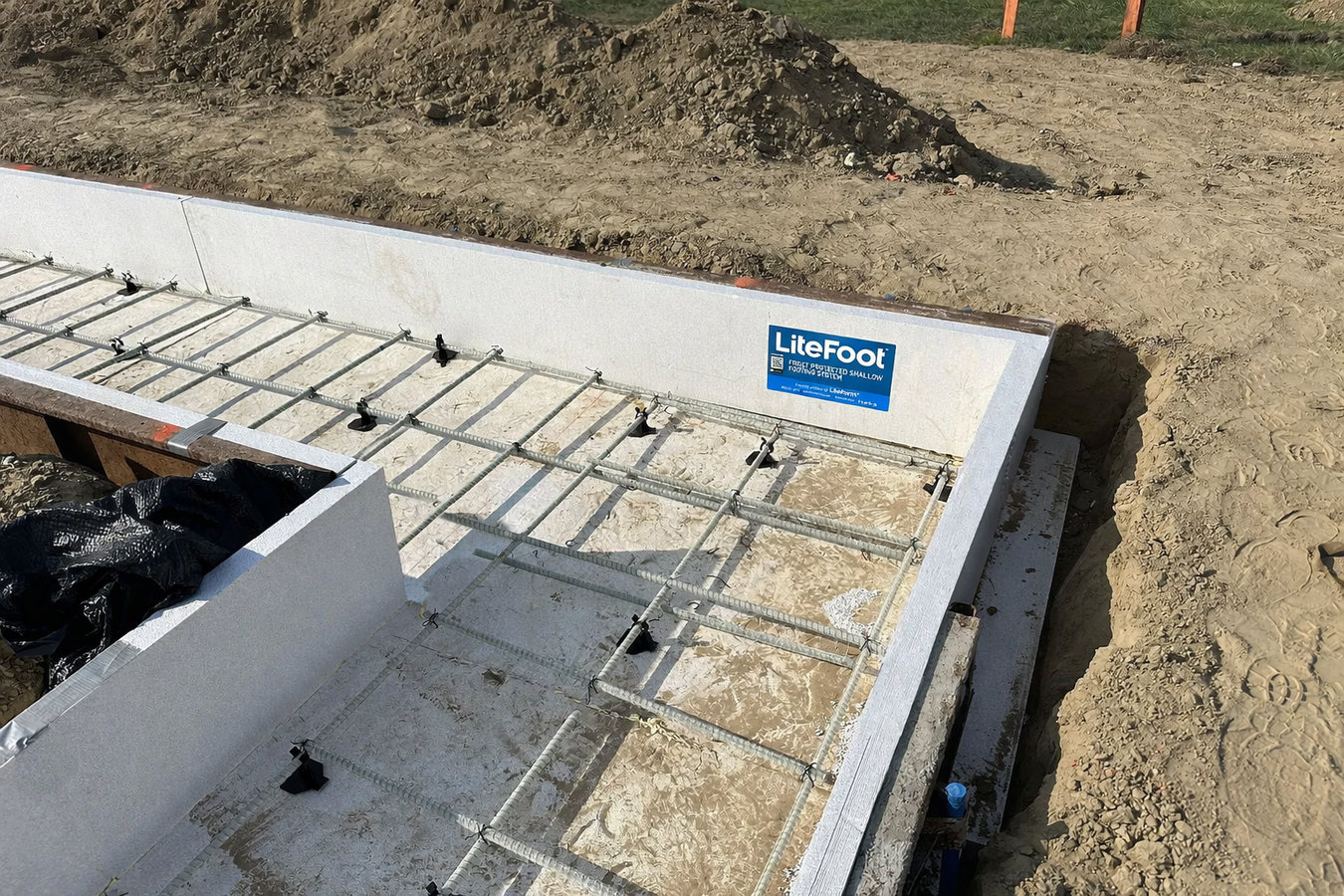
The concrete pour itself is often the shortest phase of the project. Digging the holes or trenches, placing the forms, and threading steel reinforcing bars into position takes more time than the pour, and the quality of that setup determines how the footing performs for the next 30, 50, or 80 years. We do not rush this phase - and a contractor who does is taking a shortcut you will not see until something starts to lean.
The right starting point for any new or replacement deck - properly sized and placed to carry the load and anchor the structure against lateral forces.
For homeowners adding living space to their property - footings designed to meet Cupertino's seismic and structural requirements and coordinated with the full building permit process.
For sloped lots where soil retention is critical - footings engineered for the lateral soil pressure a retaining wall carries, sized for local soil conditions.
Cupertino's housing stock is largely built on clay-heavy soils that expand when wet and contract when dry. This seasonal movement is one of the most common causes of footing failure in the area - and it is why a contractor who relies on footing designs that work in other parts of California may produce results that fail here within a few years. Cupertino's proximity to the San Andreas and Calaveras fault systems also means every footing we pour must meet California's seismic requirements - including specific steel reinforcement ratios and connection hardware that ties the footing to whatever is built on top of it. The California Geological Survey maps the seismic hazard zones that govern these requirements - and Cupertino sits firmly in one of the highest-risk areas on that map.
We work regularly in Saratoga and Campbell, where sloped lots, clay soils, and active seismic zones create the same challenges as Cupertino. Homeowners in these areas consistently tell us that the permit and inspection process - which many initially see as a hassle - is what gave them confidence that the work was done right.
We walk your property, look at where the footings need to go, and assess soil conditions and access. You receive a written estimate breaking down excavation, concrete, steel, and cleanup - everything you need to compare bids without ambiguity. We reply within one business day.
We submit the permit application to the City of Cupertino's Building Division on your behalf. For most residential footing projects, plan review takes one to three weeks. We handle follow-up with the city and keep you updated - you do not need to navigate city hall yourself.
Once the permit is approved, we dig to the required depth, set forms, and place steel reinforcing bars. A city inspector visits to verify placement before any concrete is poured - this inspection is required and is your assurance the work meets code.
After inspection approval, we pour and level the concrete. The footing needs at least seven days to cure before framing begins. The city may require a final inspection once complete. You receive documentation of city approval - paperwork that protects your home's value now and at resale.
We visit your site, assess soil and access conditions, and give you a written quote within one business day. No commitment required.
(669) 308-4473We manage the City of Cupertino Building Division permit process from application to final sign-off. Every footing we pour is inspected by a city inspector before concrete is placed - giving you documentation that the work meets code, which protects your home's value at sale.
We work across Cupertino and eleven surrounding cities, all of which sit on the same Bay Area clay soils. That means we have seen what happens when footing depth and sizing do not account for seasonal soil movement - and we design every footing to handle it.
Cupertino sits close to active fault systems, and California's building code reflects that. We place steel reinforcement to seismic specifications on every footing project we do - because living near the San Andreas Fault means your home's structural connections need to be taken seriously.
Cupertino is one of the busiest ADU markets in Santa Clara County. We have completed footing projects for attached and detached ADUs across the city and know the specific Building Division requirements that apply. Ask about typical permit timelines for ADU footings when you call.
The best footing project is one you never have to think about again after it is done. Every footing we pour in Cupertino is permitted, inspected, and built to handle the soil and seismic conditions that are specific to this area - so your deck, addition, or ADU stands on a base that will outlast the structure built on top of it.
When existing footings have settled or failed, foundation raising can lift and re-level the structure before new footing work begins - a natural companion service for older Cupertino homes.
Learn moreFor projects that require a complete foundation system rather than individual footings, full foundation installation covers the entire structural base from excavation to final inspection.
Learn moreCupertino's Building Division sees heavy volume in spring and fall - reach out now so your permit is in queue and your project starts on time.