Loading...
Serving Cupertino, CA and surrounding areas. (669) 308-4473
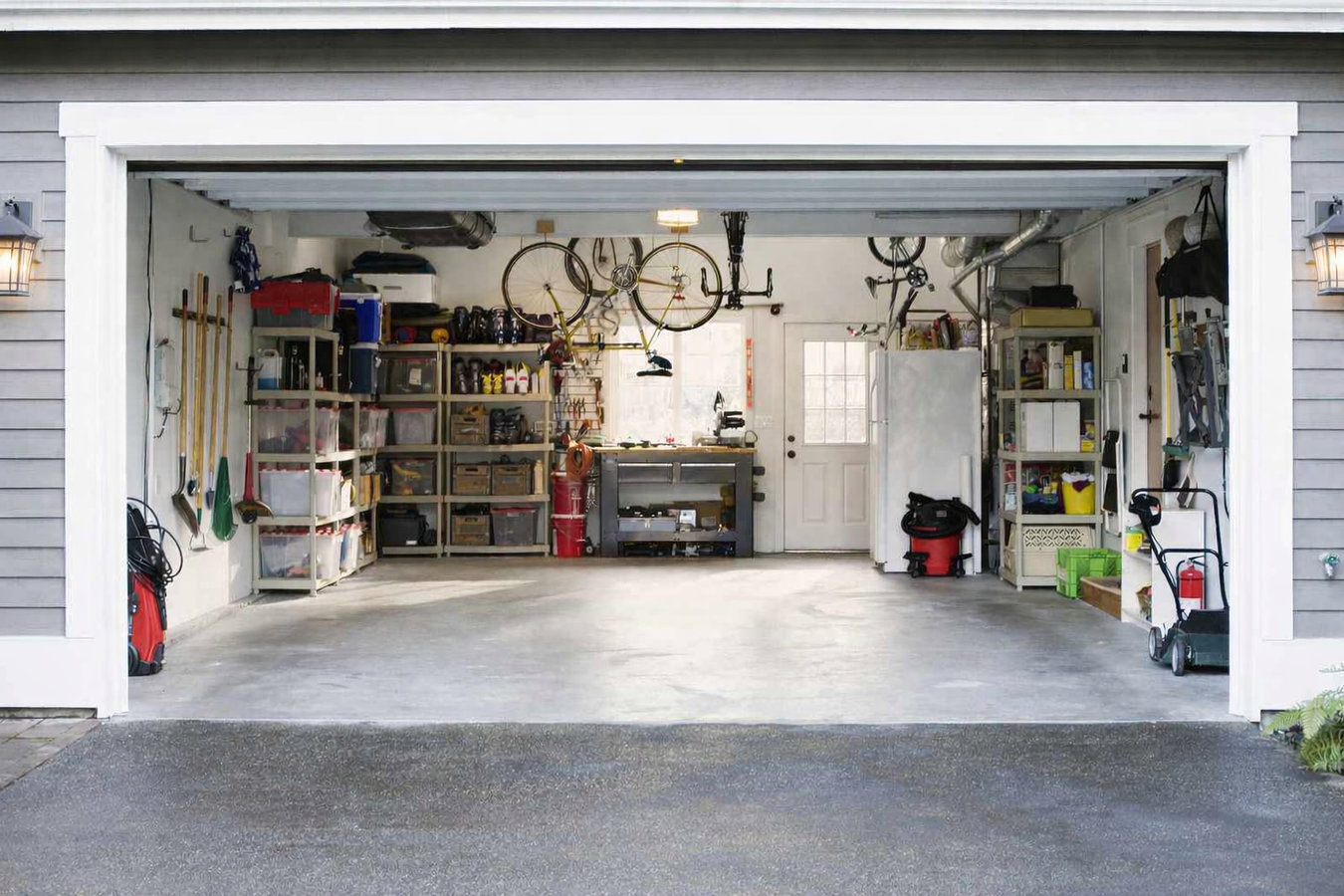
Cracked, hollow-sounding, or pooling water after rain? A new garage floor - properly poured over a prepared base - gives you a surface that holds up to daily vehicle traffic and Cupertino's clay-shifting seasons.
Garage floor concrete in Cupertino means removing the old slab, preparing a compacted base suited to the area's clay-heavy soils, pouring a reinforced slab, and finishing the surface - most residential jobs take two days of active work, plus about seven days before you can park a car on it.
Cupertino homeowners often call about garage floors after noticing cracks near the edges, sections that sound hollow when you tap them, or water that pools in the middle of the garage after winter rain. These signals all point to the same root issue: the ground underneath the slab has shifted, eroded, or never been stabilized properly. Patching the surface buys time but rarely solves the problem.
If you want to add a finished look to the new slab, our decorative concrete service can apply an epoxy or stained finish after the pour has fully cured - typically about 28 days after the slab is poured.
Small hairline cracks in concrete are normal over time, but if a crack is wide enough to fit a pencil tip - or if you see cracks running diagonally from corners - the base beneath has shifted. In Cupertino, clay-heavy soils near the foothills are a common driver of this pattern. Left open, these cracks let water in every rainy season, which weakens the base further.
Walk slowly across your garage floor and tap the surface with your heel. A hollow or drum-like sound means the soil or gravel beneath has eroded, leaving the slab unsupported in spots. This is more common on hillside lots and near seasonal drainage areas in Cupertino's older neighborhoods. An unsupported slab will eventually crack or shift under the weight of a vehicle.
A properly poured garage floor slopes slightly toward the door so water drains out naturally. If puddles form in the center or back of your garage after a storm, the floor has settled unevenly or was never graded correctly. Standing water speeds up concrete deterioration and can work its way under the slab, accelerating the problem each winter.
If the top layer is peeling off in chips or turning to powder when you sweep, the surface has started to spall. This is a sign the original pour was rushed, the mix was off, or the floor has simply reached the end of its life. Once spalling starts, it spreads - patching helps temporarily, but a full replacement is usually the better long-term call.
Every project starts with a look at the existing slab and what's underneath it. We handle demolition and debris hauling, soil assessment, gravel base compaction, steel reinforcement placement, concrete pouring and screeding, control-joint cutting, and surface finishing. If your project requires a permit from the City of Cupertino - which depends on the scope of the work - we handle that paperwork before any crew shows up. For homeowners who want a coating on the finished floor, we coordinate with our decorative concrete team to schedule that work after the slab has fully cured.
Finish options range from standard broom-finished gray to polished concrete to epoxy and polyurea coatings. Slab thickness for a residential garage typically starts at four inches, and we recommend steel mesh reinforcement inside every pour as standard - especially in Cupertino where seismic activity and soil movement can stress slabs over time. If you also want to update the interior floor elsewhere in the home, our concrete floor installation service handles those projects with the same process.
Best for homeowners who want a clean, low-maintenance surface at a straightforward price.
A good fit for homeowners who want a smooth, finished look that is easy to sweep and resists staining.
Suits homeowners who use the garage as a workspace, store vehicles, or want a finished floor that holds up to oil and chemicals.
Cupertino sits at the base of the Santa Cruz Mountains, and parts of the city - particularly neighborhoods closer to the hills like Monta Vista and near Rancho San Antonio - have clay-heavy soils that swell when winter rain soaks in and then shrink again when summer heat dries them out. That repeated movement is the primary reason garage floors crack, heave, or go hollow in this area. A contractor who does not account for local soil conditions during base preparation is setting up the new slab to fail on the same schedule as the old one. Cupertino's location near the San Andreas and Calaveras fault systems is another reason we recommend steel mesh reinforcement inside every pour - it adds resilience without adding much cost.
We regularly work with homeowners in Sunnyvale and Mountain View, where soil conditions and HOA requirements are similar to Cupertino's. If your garage is in a condo or townhome community - common near Stevens Creek Boulevard and De Anza College - we can help you identify any HOA rules about construction hours or materials before the project starts. For permit questions specific to your property, the City of Cupertino Building Division is the right place to start.
Call or submit a request online and we respond within 1 business day. We schedule a free visit to assess your slab, check soil conditions, and measure the space - no obligation to book.
You receive an itemized written estimate that covers demolition, base prep, the pour, and any finishing work. We also confirm whether a permit is needed and handle that paperwork before any crew arrives.
The crew breaks out the old slab, checks and compacts the base with gravel, places steel mesh reinforcement, and pours the new concrete - typically finishing the pour and surface work in a single day.
You can walk on the slab lightly after 24 hours. Vehicles stay off for at least seven days. We do a final walkthrough before closing out the job - and if you want a coating, we schedule that work about 28 days after the pour.
Free on-site estimate. Written quote before any work begins. No pressure to decide on the spot.
(669) 308-4473Most garage floor failures in Cupertino trace back to inadequate base preparation under the slab. We compact and grade a gravel layer on every project - a step that buffers seasonal soil movement and keeps the new slab from cracking on the same timeline as the old one.
We have completed garage floor projects across Cupertino, Sunnyvale, Santa Clara, Mountain View, and eight other cities in Santa Clara County. Local experience means we know which neighborhoods have the toughest soil conditions and which HOAs require advance notice before a crew shows up.
Whether your project needs a permit or not, we check with the City of Cupertino Building Division before work begins. That means no surprises when you go to sell, and a documented record that the job was done to city standards. The American Concrete Institute sets the standards we follow for slab construction.
In a seismically active area like Cupertino - close to both the San Andreas and Calaveras faults - we place steel mesh inside every garage floor slab as standard practice. It adds resilience against ground movement without adding meaningful cost to the project.
These are not marketing claims - they are the specific practices that determine whether a garage floor lasts 10 years or 40. Every project we take on in Cupertino gets the same base prep, the same reinforcement, and the same permit review, regardless of the size of the job.
Take your garage floor further with a stamped, stained, or polished decorative finish that holds up to Cupertino's wet winters.
Learn moreFor interior slabs beyond the garage, our concrete floor installation service covers preparation, pouring, and finishing throughout your property.
Learn moreSchedule your free on-site estimate now - dry-weather pour slots fill up fast, and starting before the November rains means your new slab cures properly.