Loading...
Serving Cupertino, CA and surrounding areas. (669) 308-4473
Building a new home or tearing down and rebuilding? Get a foundation engineered for Cupertino's seismic zone and clay soils, with every permit and inspection handled from excavation to final sign-off.
Foundation installation in Cupertino builds the complete structural base for a new residential structure - from excavation and soil compaction through poured concrete forms, steel reinforcement, and anchor hardware that connects the foundation to the framing above. Most projects take one to three weeks of active work once the city permit is approved, with an additional two to four weeks upfront for the City of Cupertino permit review.
Your foundation is the platform everything else depends on. Without a solid, properly engineered foundation, even a well-built house will shift, crack, and settle unevenly over time. In Cupertino, where median home values exceed two million dollars, a foundation is not a place to look for shortcuts or accept the lowest bid without understanding what it includes.
For projects that involve larger site work alongside the foundation - such as preparing parking areas or access driveways for new construction - we often coordinate foundation work with concrete parking lot building so heavy equipment mobilization and site preparation happen together.
If doors or windows in your home have started sticking, dragging, or no longer latch the way they used to, the frame of your house may be shifting. This kind of movement often starts at the foundation. In Cupertino, where clay soils expand and contract with the wet and dry seasons, this symptom can appear gradually over several years before it becomes obvious.
Small hairline cracks in drywall are common and usually harmless. But cracks that run diagonally from the corners of windows and doors, or cracks in your concrete floor that are wider than a quarter-inch, can signal that the foundation is moving unevenly. After a significant earthquake - and the Bay Area has had several in recent decades - it is worth having these checked even if they seem minor.
If you notice standing water, a musty smell, or damp patches along the base of interior walls, water may be getting under or around your foundation. In Cupertino, winter rains can saturate the clay soil quickly, and if drainage around your home is not directing water away effectively, it can work its way into the foundation over time. Left unaddressed, this leads to more serious structural problems.
If you are starting from scratch - whether on a vacant lot or after demolishing an existing structure - you will need a new foundation before any framing can begin. This is the most straightforward reason to call a foundation contractor, and getting the foundation right at this stage is the single most important structural decision you will make for the entire project.
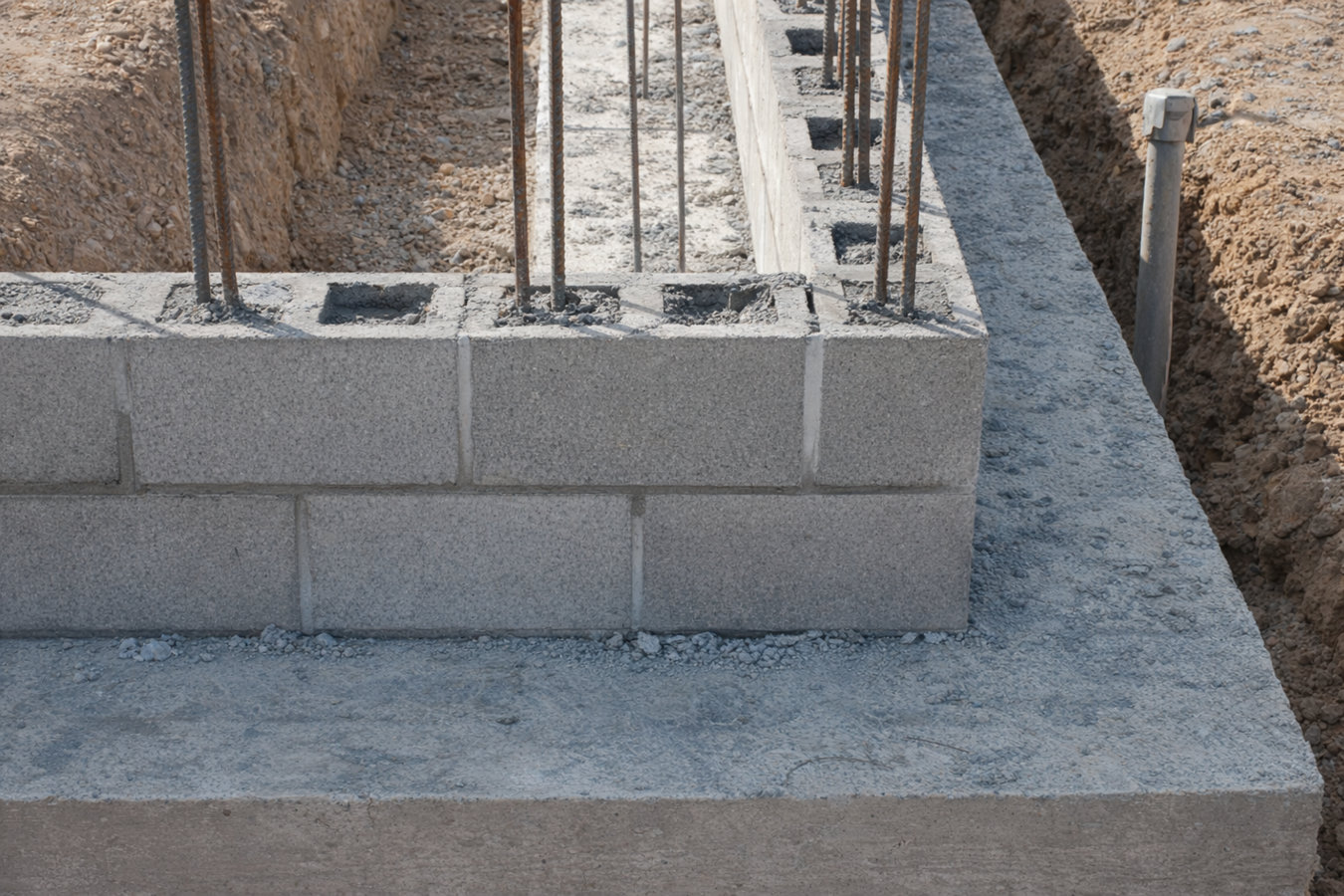
Every foundation project starts below grade, not at the concrete. We excavate to the depth required by your building plans and local soil conditions, remove soil, and compact the base to create a stable surface. Steel reinforcing bars are placed inside the forms according to your engineered plans, and anchor bolts are set at the correct spacing and height to tie your home's framing securely to the foundation. In Cupertino's seismic zone, this reinforcement is not optional - it is the core of what makes a foundation safe. Projects that need only a slab base rather than a raised foundation are matched to slab foundation building, which is a simpler approach for structures that do not require a crawl space underneath.
We handle the City of Cupertino permit application, submit any required engineering drawings, and schedule every inspection. A city inspector will visit before the pour to verify the steel placement and again at the end to sign off on the final result. When the project closes, you receive documentation that the work was reviewed and approved by the city - not just the contractor. That paper trail protects your home's value and your peace of mind now and when it is time to sell.
The right choice for homes with crawl spaces - allows access to plumbing and utilities underneath, suits sloped lots, and is the most common foundation type for traditional single-family homes in this area.
Suits level lots where a crawl space is not needed - the floor and foundation are one continuous pour, often the most economical option for new construction on stable soil.
For homes built before current seismic standards, upgrading the connection between foundation and framing significantly improves earthquake performance - a retrofit that many Cupertino homeowners pursue after structural evaluations.
Cupertino sits in one of the most seismically active regions in the United States, close to both the San Andreas and Calaveras fault systems. This means your foundation must be designed and built to handle ground shaking - not just the weight of your house. In practical terms, this adds cost and complexity: more steel reinforcement, special anchor hardware, and engineering review are all standard parts of a foundation project here, not upgrades. At the same time, much of the Santa Clara Valley has clay-heavy soils that swell when wet and shrink when dry. This seasonal movement puts stress on foundations year after year, and a contractor who knows this area will account for it in the design - using deeper footings or specific drainage measures to reduce how much the soil movement affects your home.
We work regularly in San Jose and Los Altos, where the same seismic and soil conditions apply. For homeowners who want to understand the seismic hazard in this area, the U.S. Geological Survey publishes detailed hazard maps and earthquake preparedness resources specific to the Bay Area.
We respond within 1 business day. A contractor will ask about the size of your home, the type of foundation you need, and whether you already have architectural plans. A real estimate requires a site visit - expect the visit to take 30 to 60 minutes. You will receive a written quote that covers permits, inspections, and cleanup - not just the pour.
Before any digging starts, we submit plans to the City of Cupertino Building Division and apply for a building permit. In Cupertino, this review process typically takes several weeks. We handle this on your behalf - you will need to sign some paperwork authorizing the application, but you will not need to visit the building department yourself.
Once the permit is approved, we clear and excavate the area, using heavy equipment to dig to the required depth. This phase is noisy and will affect your yard. We then set up forms and place steel reinforcing bars inside the forms according to the engineered plans. A city inspector visits before the pour to verify the steel placement matches the approved plans.
On pour day, a ready-mix truck arrives and we place concrete into the forms. The work moves quickly - a full pour for a typical home can be completed in a single day. After the pour, the concrete begins to harden. A final city inspection closes out the permit once the work is complete, and you receive the signed inspection record before the project closes.
Free on-site estimate. Written quote covers permit, engineering, inspections, and cleanup. We respond within 1 business day.
(669) 308-4473We build every foundation to meet California's current seismic requirements from the start - more steel, proper anchor hardware, and engineering review to confirm the design can handle ground movement. The city inspector will check this work, and so will we before they arrive. You get a foundation built to handle what the ground actually does in this part of the Bay Area.
We work across Cupertino, Sunnyvale, Santa Clara, Campbell, Los Gatos, Saratoga, Milpitas, Mountain View, Los Altos, San Jose, Fremont, and Redwood City. Local experience across this area means we know the soil conditions, permit processes, and inspection expectations before we set foot on your lot.
We submit the application, coordinate with the city, respond to any plan-check comments, and schedule every required inspection. You do not need to visit the Building Division or track down the permit status yourself. We keep you updated and handle everything until the final sign-off is in hand and the permit record is closed.
The Santa Clara Valley's clay soils swell and shrink with the seasons, and that movement is one of the most common causes of foundation problems in this area. We design for this from the start - deeper footings, proper drainage around the perimeter, and base preparation matched to what the soil actually does on your lot. This is not an add-on; it is how we build foundations in Cupertino.
A foundation is the most consequential part of your home - it determines whether the structure above it holds up for decades or starts showing problems within a few years. It is worth doing with a crew that knows what the soil, the seismic zone, and the city actually require.
When foundation work is part of a larger site development project, coordinating parking area concrete with foundation pours in a single mobilization saves time and cost.
Learn moreFor ADUs, garages, and structures that do not need a raised crawl space, a slab foundation is often the simpler and more economical option - still fully engineered and permitted.
Learn morePermit timelines and contractor schedules fill up fast in Cupertino's high-demand market. Reach out now and we will visit your lot, assess the soil conditions, and give you a written quote before your project window closes.